Your Followed Topics

Top 2 vera c. rubin observatory News Today

#1
How Modern and Antique Technologies Reveal a Dynamic Cosmos | Quanta Magazine
#1 out of 27.9K est. views
science1d ago

How Modern and Antique Technologies Reveal a Dynamic Cosmos | Quanta Magazine

  • Rubin Observatory to monitor the southern sky for a decade, collecting vast time-domain data and sending alerts within a minute.
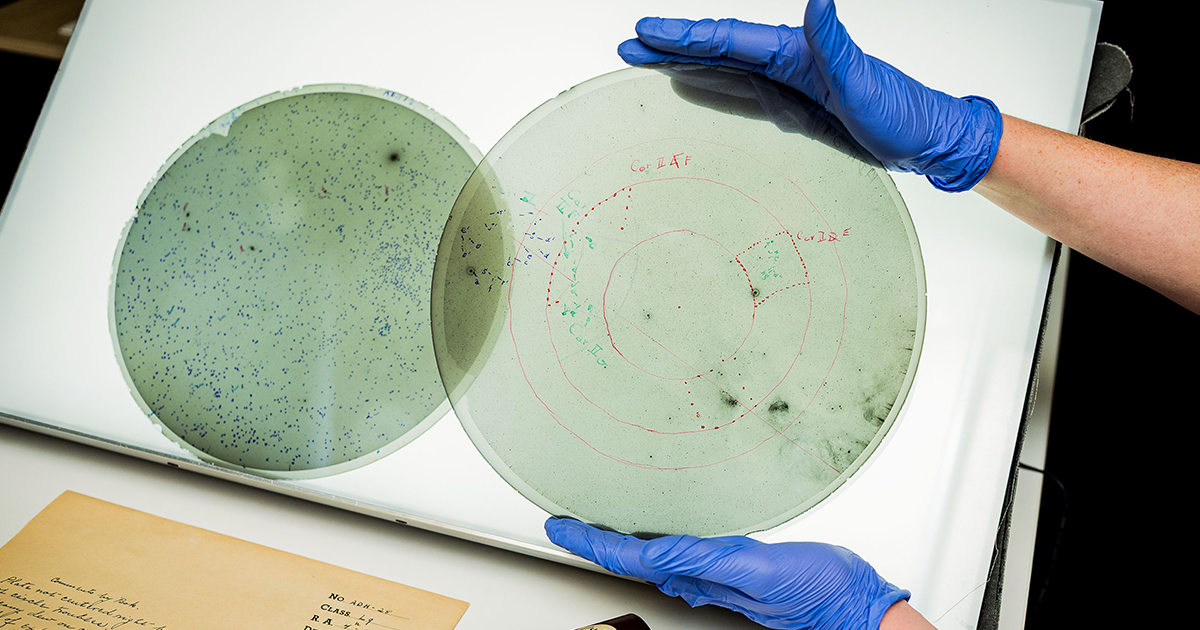
  • Historic glass plates, digitized and studied via programs like DASCH, provide decades-long data for time-domain studies.
  • Historical data help tune models of black-hole systems by revealing past flares and outbursts.
  • Glass plates offer a century-long view of the sky, with some imaging data dating back to 1896.
  • Researchers calibrate multi-era data to form a long, interconnected record of celestial changes.
  • Time-domain astronomy classifies objects as transients or variables to study underlying physics.
  • The DASCH project digitizes decades of Harvard plates, enabling wide access to archival data.
  • The study emphasizes preserving glass plate archives as they can yield hidden discoveries for modern astronomy.
  • Time-domain research links past and present observations to refine cosmological understanding.
Vote 1
0
#2
New Evidence For An As Yet Undiscovered Planet Beyond Neptune Has Been Published, And Researchers Expect To Be Able To Confirm Its Existence Within A Few Years
#2 out of 2562.0 est. views100.00%
12h ago

New Evidence For An As Yet Undiscovered Planet Beyond Neptune Has Been Published, And Researchers Expect To Be Able To Confirm Its Existence Within A Few Years

  • Latest evidence from trans-Neptunian observations suggests a warp in the Kuiper belt, hinting at a distant planet.
  • Researchers estimate a planet between Mercury and Earth could exist 100–200 AU from the Sun.
  • The supposed Planet Y could be detectable by LSST if within the Rubin Observatory’s footprint.
  • The research is published on arXiv and accepted by the Monthly Notices of the Royal Astronomical Society.
  • Planet Y's location would place it well beyond Neptune, adding to debate on planetary classification.
  • The discovery would influence whether Planet Y is recognized as a official solar system planet.
  • The Rubin Observatory LSST will play a key role in confirming Planet Y if it exists.
  • The finding hinges on a small chance (about 2%) that the warp is a fluke of solar system evolution.
  • Planet Y would have a mass between Mercury and Earth, orbiting 100–200 AU from the Sun.
Vote 0
0

Explore Your Interests

Unlimited Access
Personalized Feed
Full Experience
or
By continuing, you agree to the Privacy Policy.. You also agree to receive our newsletters, you can opt-out any time.

Explore Your Interests

Create an account and enjoy content that interests you with your personalized feed

Unlimited Access
Personalized Feed
Full Experience
or
By continuing, you agree to the Privacy Policy.. You also agree to receive our newsletters, you can opt-out any time.

Advertisement

Advertisement