Your Followed Topics

Top 9 u.s. supreme court News Today

#1
High Court Ruling Backs OT Exemption Win, Distributor Says - Law360 Employment Authority
#1 out of 9
business1d ago

High Court Ruling Backs OT Exemption Win, Distributor Says - Law360 Employment Authority

  • A Ninth Circuit ruling supports an overtime exemption claim for a food service distributor's drivers.
  • The ruling aligns with the Supreme Court interpretation on last-mile delivery workers and federal exemptions.
  • Madero v. McLane Foodservice is the case cited in the Law360 report for OT exemption discussion.
  • The article notes the need for free access or a seven-day trial to view the full text.
  • Recent related headlines include Georgia-Pacific OT implications and wage claim updates.
  • The report is part of Law360's Employment Authority coverage on wage and hour law.
  • The decision references a broader context of wage-and-hour litigation in federal courts.
  • Law360's article emphasizes the need for readers to subscribe for full access.
  • Case status shows Ninth Circuit involvement in labor-law interpretation for interstate-delivery scenarios.
Vote 0

0
#2
What It Would Take to Finally Slay the Gerrymander
#2 out of 9
politics1d ago

What It Would Take to Finally Slay the Gerrymander

  • The article links modern gerrymandering to a long history of district manipulation dating back to the 1812 origin of the term.
  • The piece describes how modern districting has been aided by advanced computer modeling and increasing polarization.
  • Supreme Court decisions and civil rights laws are cited as both enabling and constraining districting practices.
  • Stoughton Cooley’s 1892 writings are presented as a critique of districting and a proposal for proportional representation.
  • The author argues that gerrymandering corrodes political culture by diminishing minority-party engagement.
  • The piece emphasizes a potential reform path through proportional representation to reflect the statewide vote share.
  • The article notes that the Voting Rights Act curtailed efforts to dilute Black political representation in the South.
  • The account highlights 'one person, one vote' as central to the 1964 Wesberry decision and redistricting practices.
  • The piece warns that the current era presents a 'golden age' of gerrymandering with new tools and opportunities.
  • The article frames districting as a structural problem that may require rethinking representation altogether.
  • Overall, the piece connects historical lessons to a contemporary debate over how to achieve fair representation.
Vote 0
0
#3
finance.yahoo.com
#3 out of 9
business1d ago

Stock Market Today, June 4: AT&T Falls After Supreme Court Rules Against Wireless Carriers in FCC Case

  • AT&T fell after the Supreme Court ruled 8-1 in favor of the FCC, imposing penalties related to location data handling.
  • The ruling signals continued FCC scrutiny of telecom firms, affecting AT&T and peers.
  • The broader market showed mixed results, with the S&P 500 up and the Nasdaq slightly down.
  • Verizon and T-Mobile shares were also in focus as investors weighed the court's decision.
  • One analyst downgrade cited increased competition from satellite constellations impacting AT&T.
  • AT&T’s stock move is placed in historical context with prior performance comparisons.
  • AT&T’s fine amounted to $57 million, seen as small relative to its market value.
  • The Motley Fool published the article as part of a broader market overview for June 4.
  • Investors received mixed signals about telecoms from the court decision and analyst notes.
  • The Motorola Fool cautions about future regulatory impacts on telecoms.
Vote 0
0
#4
finance.yahoo.com
#4 out of 9
business19h ago

Verizon (VZ) Stock Trades Down, Here Is Why

  • The U.S. Supreme Court ruled 8-1 that the FCC can fine Verizon for mishandling location data without a jury, heightening regulatory risk.
  • Verizon faced a nearly $47 million fine tied to selling access to customer location data without consent.
  • Shares fell about 3.9% in the afternoon session but recovered some losses to around $44.86.
  • Analysts see the move as a reflection of ongoing regulatory and legal risks for Verizon.
  • The report notes Verizon’s year-to-date gains but price still sits below its 52-week high.
  • The article highlights a positive longer-term outlook, noting improved cash flow and guidance ahead.
  • Market coverage includes references to other assets and a prompt to view a full analysis report.
  • The ruling relates to the FCC's authority to fine for location data mishandling without jury involvement.
  • Verizon faced scrutiny over data practices that could affect consumer privacy and trust.
Vote 0
0
#5
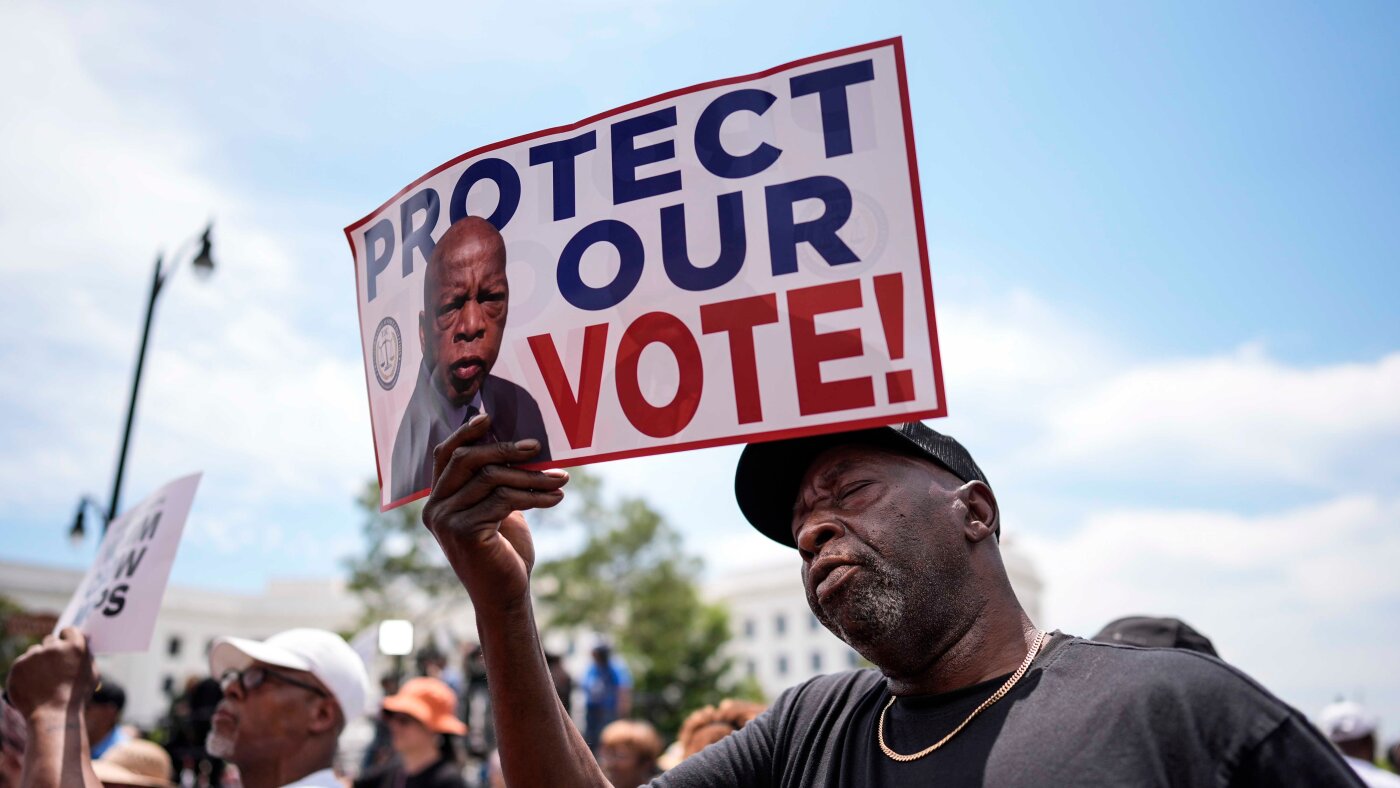
The Supreme Court has left limited alternatives for protecting minority voting rights
#5 out of 9
politics17h ago

The Supreme Court has left limited alternatives for protecting minority voting rights

  • The Supreme Court affirmed Alabama's congressional map despite findings of intentional discrimination, narrowing federal protections.
  • State-level voting rights acts offer targeted protections beyond the federal law, but mostly cover state and local elections.
  • Democratic lawmakers are advancing state protections in Michigan, New Jersey, and Delaware to guard minority voting rights.
  • Experts warn that state laws may be weakened or struck down, limiting their effectiveness compared to federal protections.
  • Partisan redistricting remains a concern, with Democrats potentially spreading voters to gain seats while preserving minority influence.
  • Experts say federal action will take years, pushing reliance on state-level reforms in the near term.
  • The ruling raises questions about the future of minority representation in Congress and the South.
  • California's new congressional map was cited as an example of a redistricting approach that could maintain minority representation.
  • The DOJ did not respond to NPR's request for comment on the ruling's fallout.
  • Scholars expect a longer road to strengthening the federal Voting Rights Act or establishing new nationwide protections.
Vote 0
0
#6
Supreme Court sides with FCC in clash with wireless carriers over fines
#6 out of 9
business17h ago

Supreme Court sides with FCC in clash with wireless carriers over fines

  • The Supreme Court ruled 8-1 that the FCC may use its in-house process to levy fines against wireless carriers.
  • AT&T and Verizon challenged the FCC's in-house process after being fined for selling location data without user consent.
  • The FCC had imposed nearly $200 million in fines across carriers for failing to safeguard customer data.
  • Verizon and AT&T paid their fines but appealed, creating a split among regional appellate courts.
  • The ruling follows a 2024 trend of courts reviewing in-house enforcement powers in federal agencies.
  • The government argued that FCC assessments are not binding and could be challenged in court.
  • The case centers on whether a penalty process belongs in court or can stay within agency proceedings.
  • The FCC fined multiple carriers, including T-Mobile and Sprint, for data handling practices.
  • The court reaffirmed that initial penalties may be challenged in court with the right to a jury trial.
  • The decision reflects ongoing scrutiny of agency enforcement powers in high-profile tech and privacy cases.
Vote 0
0
#7
Man who spent 30 years on death row reveals what life is like after release
#7 out of 9
crime11h ago

Man who spent 30 years on death row reveals what life is like after release

  • Richard Glossip, 63, was released from Oklahoma’s death row after the Supreme Court overturned his conviction and ordered a new trial.
  • Kim Kardashian helped secure Glossip’s release by paying a portion of his bail deposit.
  • Outside life has been challenging for Glossip, with adjustments like learning to live without constant prison routines.
  • Glossip described simple frustrations, like turning on water and not having it cut off automatically, as part of his adjustment.
  • Glossip said he experiences emotional triggers that remind him of his years on death row, despite his efforts to stay resilient.
  • Glossip’s release followed years of legal battles and public attention surrounding his case.
  • Glossip’s bond was initially set at $500,000 as he awaited his release.
  • The Intercept published an exclusive interview with Glossip discussing his adjustment to life outside prison.
  • Glossip lives in Oklahoma City with his wife, Lea, whom he married in prison in 2022.
  • Glossip maintained his innocence throughout the trial, even as co-worker Sneed testified against him.
Vote 0
0
#8
Sign Petition: Conversion Therapy for Children Is Abuse. US States Must Continue to Fight This Nonscientific Practi
#8 out of 9202.2K est. views
politics5h ago

Sign Petition: Conversion Therapy for Children Is Abuse. US States Must Continue to Fight This Nonscientific Practi

  • The petition calls on U.S. states to continue banning conversion therapy for minors.
  • Campaign labels conversion therapy as abusive and not real therapy.
  • Supreme Court actions are cited as context for state policy on LGBTQ protections.
  • UK lawmakers explore a nationwide ban on conversion therapy.
  • Many U.S. states have already banned the practice amid ongoing reforms.
  • Campaign stresses that families should support LGBTQ youth rather than shame them.
  • Medical associations worldwide condemn conversion therapy for harming youth.
  • The petition frames prevention of harm as a priority for children's rights.
  • The petition links policy action to broader human rights and safety goals.
  • Petition urges public support by encouraging sharing and signing.
Vote 0
0
#9
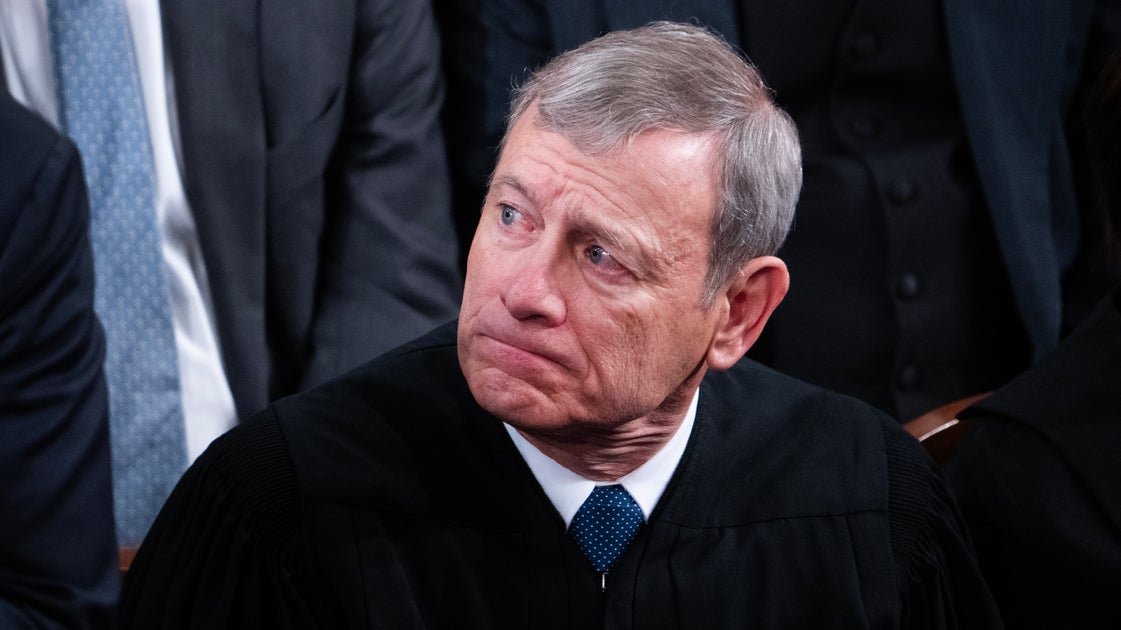
The Supreme Court Is Illegitimate
#9 out of 9
politics3h ago

The Supreme Court Is Illegitimate

  • The Supreme Court broadened the standard that can overturn racially discriminatory maps, affecting future Voting Rights Act challenges.
  • The ruling involved Alabama’s map and the district court’s injunctions, with the Supreme Court ordering changes mid-election.
  • Dissenting Justice Sonia Sotomayor criticized the decision as undermining civil rights progress and governance.
  • Callais was used to shift how partisanship and race interact in determining discriminatory effects in voting maps.
  • The Court’s decision involved the balance between state election administration and federal oversight amid a near-term election.
  • The majority’s ruling drew on the 14th Amendment and Voting Rights Act to justify the decision.
  • The decision was accompanied by vigorous public debate about Purcell and election timing.
  • Alabama’s law changing primary timing became a focal point in the court’s reconsideration.
  • The article frames the decision as a potential setback for civil rights protections in voting.
  • The HuffPost piece marks the decision as a pivotal moment in how the court views race and partisanship in election law.
  • The article notes a split between majority opinion and dissent on the implications for civil rights.
Vote 0
0

Explore Your Interests

Unlimited Access
Personalized Feed
Full Experience
or
By continuing, you agree to the Privacy Policy.. You also agree to receive our newsletters, you can opt-out any time.

Explore Your Interests

Create an account and enjoy content that interests you with your personalized feed

Unlimited Access
Personalized Feed
Full Experience
or
By continuing, you agree to the Privacy Policy.. You also agree to receive our newsletters, you can opt-out any time.

Advertisement

Advertisement