#1
#1 out of 110.7K est. views98.62%
3h ago
289‑Million‑Year‑Old Reptilian Mummy Sheds Light on How Amniotes Learned to Breathe
- A 289-million-year-old reptile mummy from Oklahoma reveals a rib-based breathing system likely ancestral to modern amniotes.
- Researchers used neutron computed tomography to view skin, bones, and cartilage without disturbing the fossil.
- The mummy preserves skin with an accordion-like texture, indicating a protective, scaled covering.
- The study connects costal aspiration breathing to the diversification and land dominance of amniotes.
- Original proteins were found in cartilage, bone, and skin, dating about 100 million years older than other samples.
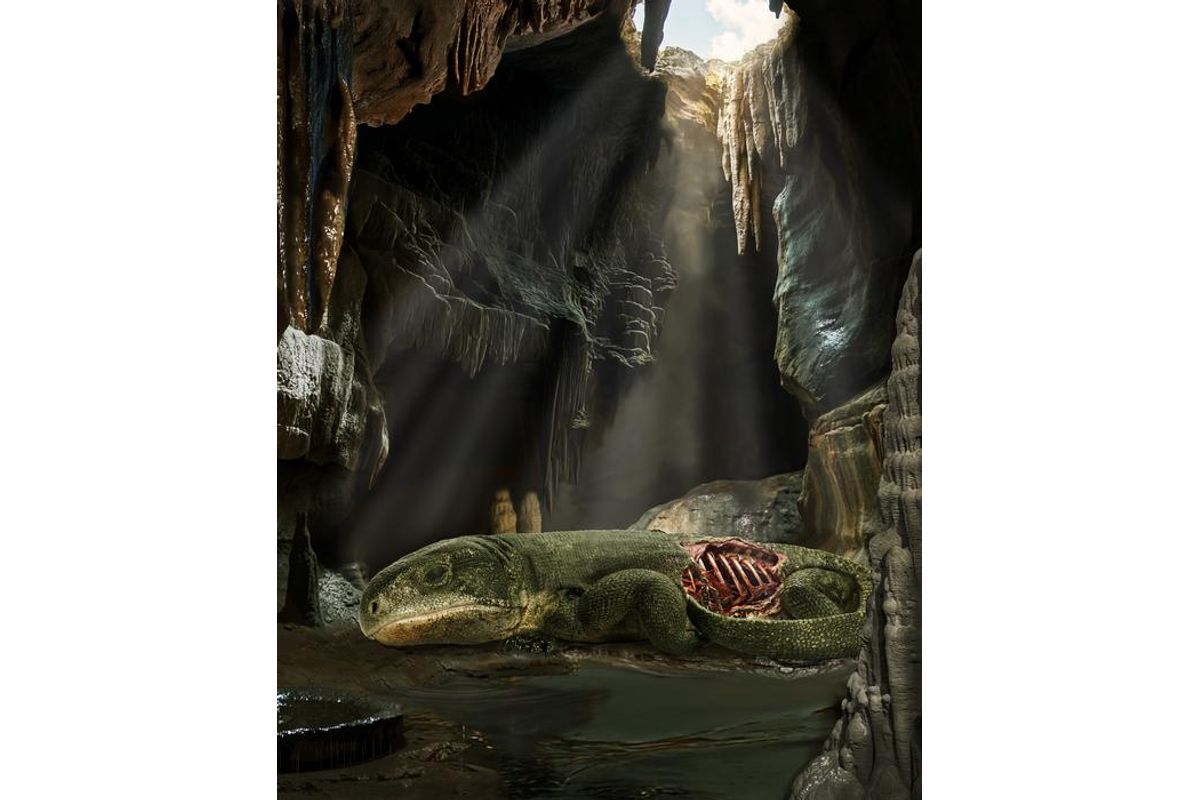
- Captorhinus aguti lived in the early Permian and provides clues on early amniote evolution.
- The fossil was found in a cave system near Richards Spur, Oklahoma, noted for diverse terrestrial vertebrates.
- The costal aspiration breathing mechanism uses rib muscles to expand the chest and draw air into the lungs.
- Findings imply amniotes' more active lifestyle helped drive their diversification and land dominance.
- The study was published in Nature and involved researchers including Ethan Mooney and Robert R. Reisz.
Vote 0