Your Followed Topics

Top 6 physics News Today

#1
Earth has a tail, flowing for millions of kilometres into space on its dark side
#1 out of 6562.0 est. views81.82%
4h ago

Earth has a tail, flowing for millions of kilometres into space on its dark side

  • Earth hosts a magnetotail formed by the interaction of its magnetosphere with the solar wind, extending behind the planet on the night side.
  • NASA explains that the magnetosphere traps plasma and shapes a tail as solar wind returns plasma away from Earth.
  • The tail may extend to about two million kilometres behind Earth, though exact length is uncertain.
  • Mercury's tail forms from sodium and solar radiation pressure when near the Sun, a comparison to Earth's magnetotail.
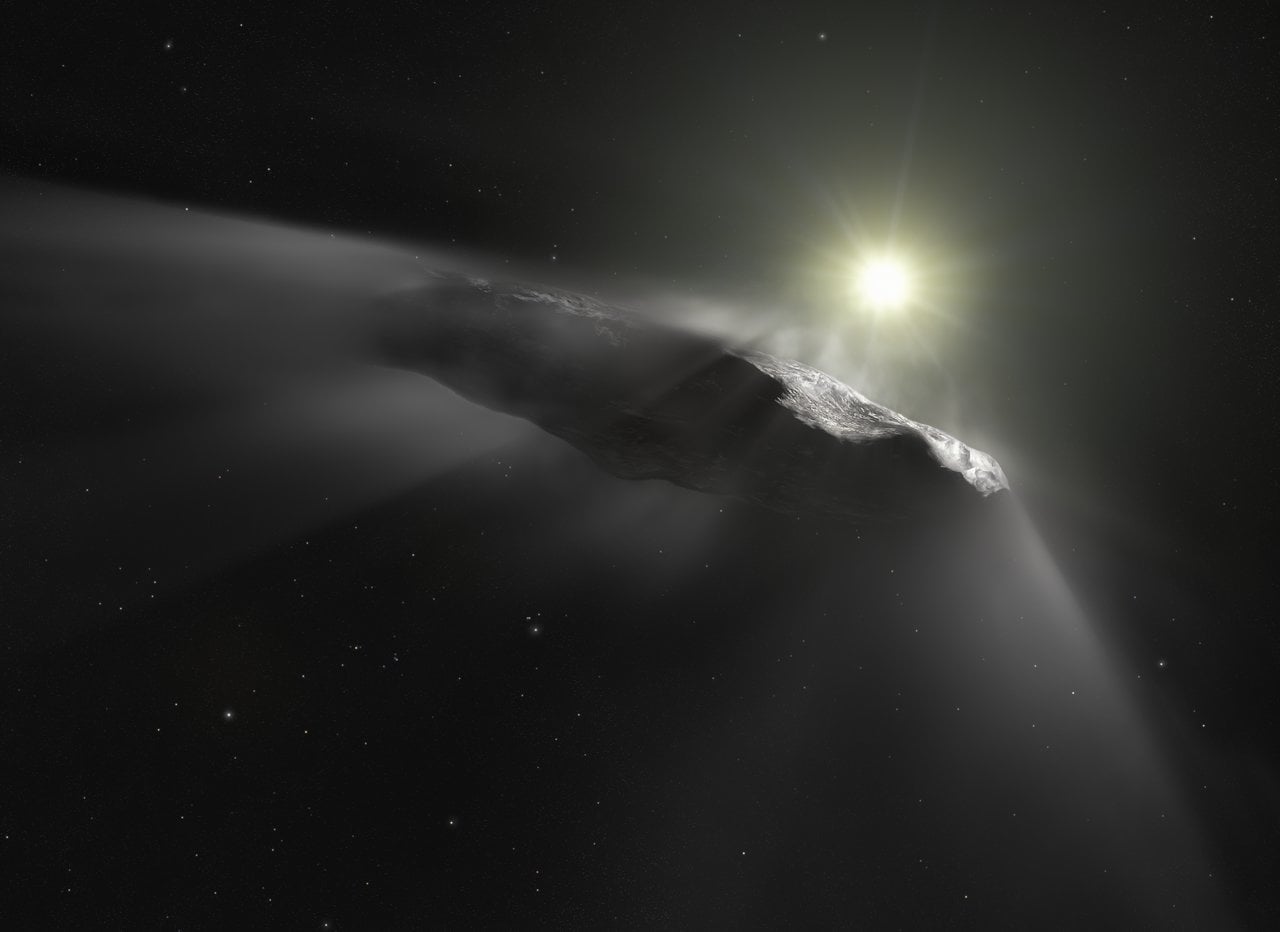
  • 3I/ATLAS, an interstellar visitor, also exhibits tail features discussed alongside Earth’s tail in the article.
  • European Space Agency comments on the uncertain length of Earth’s magnetotail, guiding the estimate.
  • NASA’s description connects magnetotail dynamics to the solar wind’s influence on Earth's space environment.
  • The article links the tail phenomenon to related space events and objects, such as 3I/ATLAS and interstellar topics.
  • The piece emphasizes that multiple celestial bodies can display tails under different conditions.
Vote 0
0
#2
99.9999999% Certainty: Astronomers Confirm a Discovery with Far-Reaching Consequences for the Universe's Fate
#2 out of 6
1d ago

99.9999999% Certainty: Astronomers Confirm a Discovery with Far-Reaching Consequences for the Universe's Fate

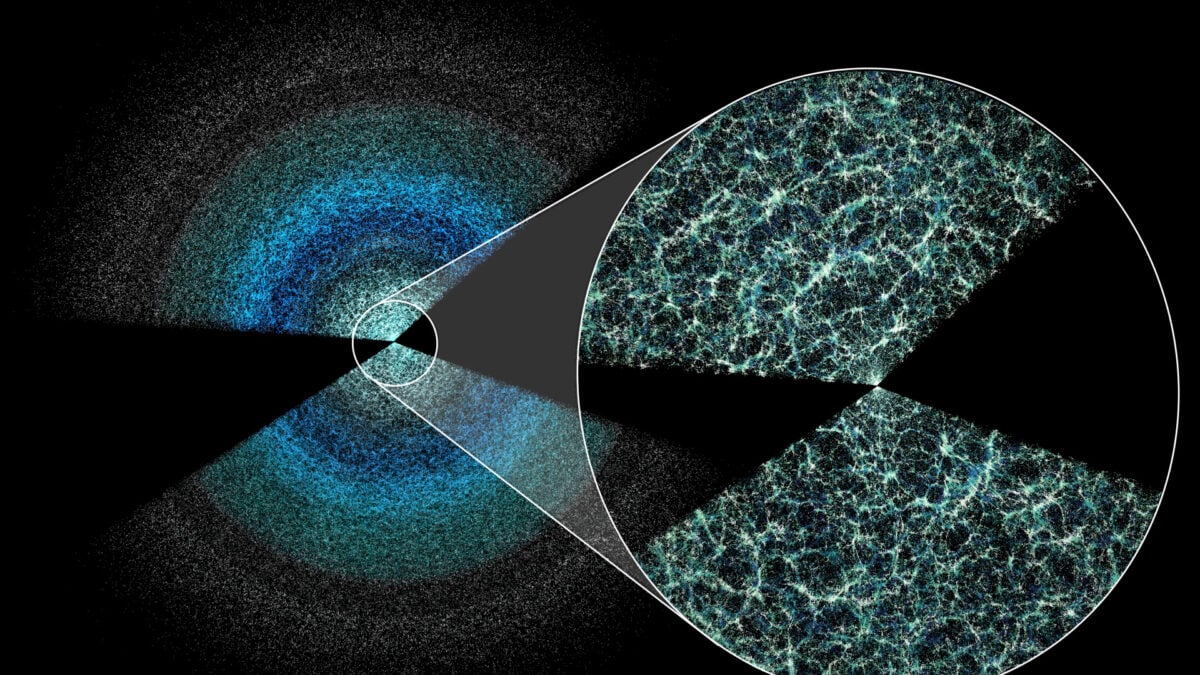
  • New study links host-galaxy age to Type Ia supernova brightness, challenging standard candles.
  • Correcting the age bias could remove evidence for an accelerating cosmic expansion.
  • Findings align with a dynamic dark energy model rather than a constant one.
  • DES observations also show tension with the ΛCDM model, supporting the reassessment.
  • Future surveys like LSST and Euclid could test whether dark energy evolves over time.
  • The study analyzes more than 300 SN Ia host galaxies to identify the trend.
  • Younger galaxies tend to host dimmer supernovae after standardization, biasing distances.
  • The work could explain part of the Hubble tension between CMB and distance-ladder methods.
  • Isolating supernovae in galaxies of uniform age is essential for robust cosmology tests.
Vote 0
0
#3
Temporal anti-parity–time symmetry in diffusive transport - Nature Physics
#3 out of 6
1d ago

Temporal anti-parity–time symmetry in diffusive transport - Nature Physics

  • Temporal anti-PT symmetry is used to actively shape diffusion dynamics in real time.
  • Dynamic control of material properties enables programmable heat transport history.
  • Experiment shows heat can move with, against, or be trapped by convection.
  • Temporal APT symmetry extends non-Hermitian physics into the time domain.
  • The study demonstrates robust transport control under parameter jitter and boundary changes.
  • The research provides a framework for programmable energy transport in metamaterials.
  • The work includes experimental demonstrations of heat trapping and cooling applications.
  • Researchers show backward heat evolution is tunable by temporal control.
  • Temporal APT symmetry enables precise localization of heat peaks.
Vote 0
0
#4
Observation of deuteron and antideuteron formation from resonance-decay nucleons - Nature
#4 out of 6
1d ago

Observation of deuteron and antideuteron formation from resonance-decay nucleons - Nature

  • ALICE analyzes π±–d correlations in pp collisions to study deuteron formation mechanisms.
  • Researchers find that deuteron formation proceeds after Δ resonance decays rather than direct emission.
  • Approximately 88.9% of (anti)deuterons originate from resonance binding, per the analysis.
  • A true fraction around 69% is estimated after correcting for pion efficiency and acceptance.
  • Δ resonance shapes are extracted from π–p correlations to model π–d spectra.
  • The study uses the CATS framework to model interactions in the π–d system.
  • Measured Δ peak shifts to lower mass values due to rescattering effects.
  • EPOS 3 and ThermalFIST are used to compare resonance production with data.
  • The analysis covers high-multiplicity pp collisions at 13 TeV, focusing on Δ contributions to deuteron yields.
  • The researchers quantify the resonance fraction and discuss implications for cosmic ray modelling.
Vote 0
0
#5
Is the universe ending sooner than we thought? New physics suggests a much shorter lifespan | - The Times of India
#5 out of 6
13h ago

Is the universe ending sooner than we thought? New physics suggests a much shorter lifespan | - The Times of India

  • Latest research from Radboud University proposes a Hawking-like evaporation affecting all dense objects, not just black holes.
  • The new model lowers the universe’s end time from 10¹¹⁰⁰ years to roughly 10⁷⁸ years, a vast but finite timescale.
  • The concept hinges on spacetime curvature around massive objects influencing evaporation rates.
  • White dwarfs and neutron stars could eventually evaporate, contributing to the final fade of luminous matter in the universe.
  • The study clarifies that the revised timeline does not imply observable changes to daily life or humanity's future.
  • The research integrates astrophysics, mathematics, and quantum physics to explore extreme cosmological scenarios.
  • Impactful findings come from revisiting Hawking radiation beyond event horizons, applying to curved spacetime around massive bodies.
  • Even with a shorter timeline, the universe remains beyond practical human comprehension in terms of timescales.
  • The article notes that this is about deep-time cosmology, not an immediate threat to daily life.
  • Experts emphasize that the end of the universe will occur after the last luminous matter evaporates.
Vote 0
0
#6
No sterile neutrinos after all, say MicroBooNE physicists
#6 out of 6
5h ago

No sterile neutrinos after all, say MicroBooNE physicists

  • MicroBooNE finds no evidence of sterile neutrinos, confirming a null result for this hypothesis.
  • The latest paper confirms there are no oscillations into a sterile neutrino in MicroBooNE data.
  • Fermilab’s search now shifts to alternative explanations and new experiments for the earlier anomalies.
  • The Deep Underground Neutrino Experiment (DUNE) is under construction to study high-energy neutrinos.
  • MicroBooNE’s size enabled precise measurements, aiding future large-scale detectors like DUNE.
  • MicroBooNE used a liquid-argon time projection chamber to analyze neutrino interactions.
  • MicroBooNE’s five-year data set (2015–2021) underpins the null result for sterile neutrinos.
  • The findings guide ongoing and future neutrino research within the SBN program and DUNE.
  • The Nature paper detailing MicroBooNE’s results is published with DOI 10.1038/s41586-025-09757-7.
Vote 0
0

Explore Your Interests

Unlimited Access
Personalized Feed
Full Experience
or
By continuing, you agree to the Privacy Policy.. You also agree to receive our newsletters, you can opt-out any time.

Explore Your Interests

Create an account and enjoy content that interests you with your personalized feed

Unlimited Access
Personalized Feed
Full Experience
or
By continuing, you agree to the Privacy Policy.. You also agree to receive our newsletters, you can opt-out any time.

Advertisement

Advertisement