Your Followed Topics

Top 2 national geographic News Today

#1
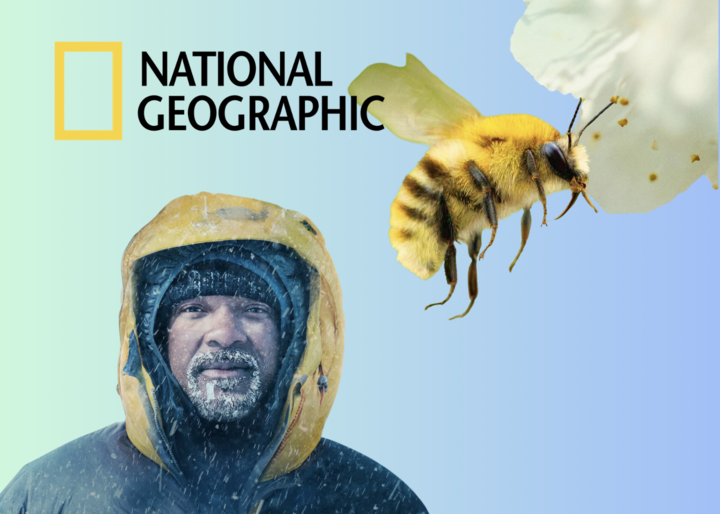
‘We were the first team to use Starlink in Antarctica’: How Pole to Pole with Will Smith broke multiple world firsts
#1 out of 2

‘We were the first team to use Starlink in Antarctica’: How Pole to Pole with Will Smith broke multiple world firsts

  • Pole to Pole showcases Will Smith filmed in Antarctica with polar guide Richard Parks, highlighting extreme conditions and tech challenges.
  • The production uses ARRI cameras and Starlink, marking unique tech milestones for Antarctic filming.
  • Parks explains equipment limits, noting that plastic and cables fail in extreme cold, so careful material choices are essential.
  • Starlink and wired audio help sustain operations, with multiple spare headphones to beat power and durability limits.
  • The show emphasizes climate themes and connectivity across ecosystems from the Amazon to Antarctica.
  • Pole to Pole is noted for using ARRI ALEXA Mini LF and ALEXA 35 to capture Antarctic footage.
  • Parks notes the use of Starlink in Antarctica as a significant milestone for remote production.
  • The series aims to spark conversations about climate and planetary interconnectedness.
  • Pole to Pole’s first two episodes are available on Hulu and Disney+.
  • The article highlights the episode's production quality, noting ARRI cameras and on-site improvisations.
Vote 0
0
#2
Is it raining or snowing? Here’s why that’s so hard for scientists to answer.
#2 out of 2
weather17h ago

Is it raining or snowing? Here’s why that’s so hard for scientists to answer.

  • Researchers are combining ground instruments, video analysis, and machine learning to classify precipitation as rain or snow.
  • Video distrometers capture high-speed images of falling precipitation to improve readings.
  • Citizen scientists helped crowdsource nearly 100,000 observations of rain, snow, or mixed precipitation.
  • Automated sensors face challenges in mountain terrain and during ice storms, where maintenance delays occur.
  • Mountains may shift precipitation from snow to rain as climate change alters baselines and weather patterns.
  • A combination of satellites, lasers, ground instruments, and AI helps resolve precipitation types more accurately.
  • Storm Peak Laboratory on a Colorado mountaintop serves as a testbed for multi-instrument precipitation studies.
  • Researchers are exploring automated observations to reduce the need for human monitoring in the future.
  • The findings impact road planning, water management, and drought monitoring as snowpack changes with climate.
  • Experts stress that human observation remains valuable even with advanced technologies.
Vote 0
0

Explore Your Interests

Unlimited Access
Personalized Feed
Full Experience
or
By continuing, you agree to the Privacy Policy.. You also agree to receive our newsletters, you can opt-out any time.

Explore Your Interests

Create an account and enjoy content that interests you with your personalized feed

Unlimited Access
Personalized Feed
Full Experience
or
By continuing, you agree to the Privacy Policy.. You also agree to receive our newsletters, you can opt-out any time.

Advertisement

Advertisement