#1
#1 out of 1
13h ago
Is the universe ending sooner than we thought? New physics suggests a much shorter lifespan | - The Times of India
- Latest research from Radboud University proposes a Hawking-like evaporation affecting all dense objects, not just black holes.
- The new model lowers the universe’s end time from 10¹¹⁰⁰ years to roughly 10⁷⁸ years, a vast but finite timescale.
- The concept hinges on spacetime curvature around massive objects influencing evaporation rates.
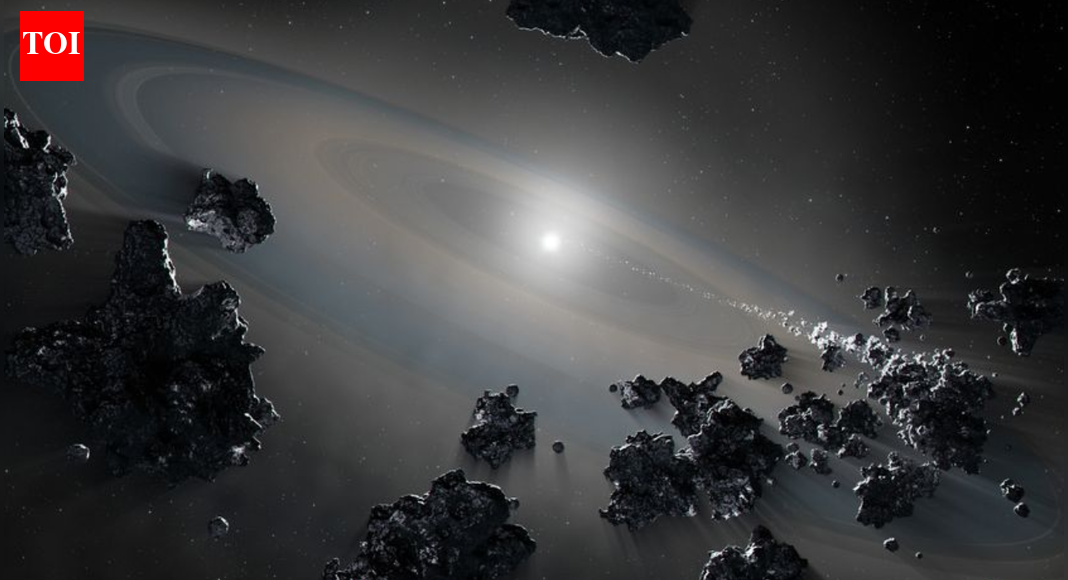
- White dwarfs and neutron stars could eventually evaporate, contributing to the final fade of luminous matter in the universe.
- The study clarifies that the revised timeline does not imply observable changes to daily life or humanity's future.
- The research integrates astrophysics, mathematics, and quantum physics to explore extreme cosmological scenarios.
- Impactful findings come from revisiting Hawking radiation beyond event horizons, applying to curved spacetime around massive bodies.
- Even with a shorter timeline, the universe remains beyond practical human comprehension in terms of timescales.
- The article notes that this is about deep-time cosmology, not an immediate threat to daily life.
- Experts emphasize that the end of the universe will occur after the last luminous matter evaporates.
Vote 0