#1
#1 out of 10.00%
2h ago
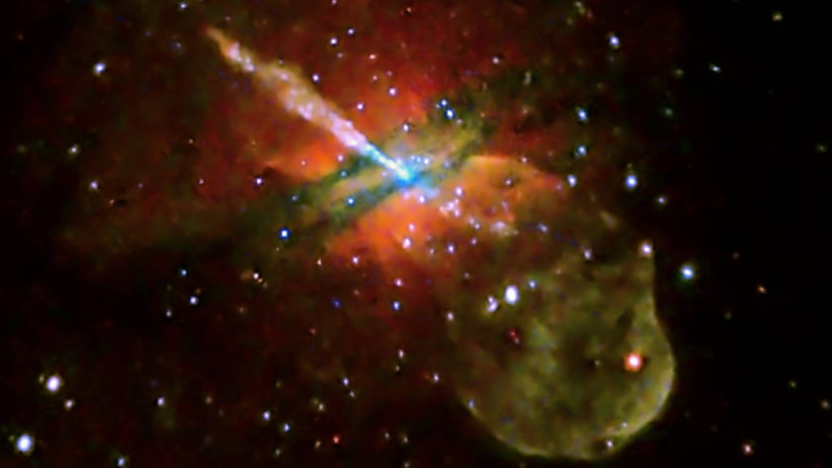
Supermassive black holes launch the most powerful cosmic jets
- Jet activity around supermassive black holes is powered by material and electromagnetic effects surrounding the hole.
- Jets observed in a range of objects show how energy is transported from accretion disks into vast outflows.
- Nearby galaxies and distant quasars both exhibit jet activity linked to black hole dynamics.
- The largest jets emerge from massive black holes in active galaxies and quasars.
- Event-horizon-scale observations reveal the jet structures and their relation to accretion processes.
- Milky Way activity demonstrates jets and outflows within our own galactic center.
- The jet phenomenon is visible across wavelengths, from X-ray to radio emissions.
- Extremely large jets can span millions of light-years, illustrating sheer cosmic scale.
- Electromagnetic forces, not the event horizon itself, power jet acceleration.
Vote 0