Your Followed Topics

Top 9 environment News Today

#1
When she was a student, the Monterey Bay Aquarium blew her away. Now she'll run it
#1 out of 912.9K est. views20.05%
business1h ago

When she was a student, the Monterey Bay Aquarium blew her away. Now she'll run it

  • Jenny Gray named Monterey Bay Aquarium's second chief executive, taking over in May after Julie Packard's long tenure.
  • Gray's background spans zoological leadership in Australia and ethics, with a Berkeley master’s and Melbourne PhD.
  • Under Gray, four zoos nearly doubled annual visitors and memberships rose fivefold.
  • Gray emphasizes education and conservation, planning new exhibits and impactful ocean education.
  • Gray supported environmental work in Durban, including merging bus lines for equitable access.
  • Gray’s appointment aligns with Monterey’s ocean education and conservation mission.
  • The announcement notes Packard’s 40-year leadership and ongoing board involvement.
  • Gray’s work includes supporting open seas treaty advocacy and plastic-reduction efforts.
  • Gray’s focus includes protecting endangered species and expanding ocean exhibits.
  • The newsletter emphasizes ongoing climate and water-related impacts on California.
Vote 1
0
#2
Prince William to Make an Appearance in a Special Place With Ties to Both Kate Middleton and Princess Diana
#2 out of 9
world1d ago

Prince William to Make an Appearance in a Special Place With Ties to Both Kate Middleton and Princess Diana

  • Prince William announced the Earthshot Prize will be held in Mumbai, India, in November 2026.
  • The Mumbai stop marks a continued effort to spotlight climate and nature progress on a global stage.
  • The event ties into past royal history, linking William and Kate to India and Diana’s memory in that country.
  • The publication references Diana’s 1992 Taj Mahal visit as part of the historical backdrop to William and Kate’s India connection.
  • Past Earthshot ceremonies occurred in London, Boston, Singapore, Cape Town, and Rio de Janeiro before this Mumbai edition.
  • William expressed hope that India’s progress can inspire climate action worldwide.
  • The announcement suggests a potential involvement of Kate Middleton in Earthshot events alongside William’s India visit.
  • The piece situates the location within a narrative of royal ties to India and the legacy of Diana’s Taj Mahal moment.
  • The Earthshot Prize event aims to demonstrate global momentum in environmental innovation.
  • The Mumbai venue selection aligns with Earthshot’s history of highlighting international progress in conservation.
Vote 0
0
#3
The Tiny Pest That Nearly Wiped Out the World’s Wine
#3 out of 9
world1d ago

The Tiny Pest That Nearly Wiped Out the World’s Wine

  • Phylloxera, a tiny aphid-like insect, attacked vine roots and nearly destroyed Europe’s vineyards in the 19th century.
  • By 1873, France faced widespread losses, prompting an urgent search for a remedy to save its vineyards.
  • American rootstocks proved key, grafting European vines onto resistant Vitis species saved vast vineyards.
  • By 1990, about 85% of the world’s vineyards were grafted onto resistant rootstock.
  • Some regions preserved ungrafted vines in sandy soils and isolated spots like Bollinger’s Vieilles Vignes Françaises in Champagne.
  • Champagne’s debate over grafting reflects broader questions about wine quality and rootstock effects.
  • Rootstock diversity is used to tailor vigor, drought tolerance, and disease resistance in vineyards worldwide.
  • Soil type, especially sandy soils, can limit phylloxera's life cycle and help sustain ungrafted vines in niche areas.
  • Americans Riley and Munson played pivotal roles in identifying and applying the rootstock solution.
  • Phylloxera's spread was accelerated by human activity, including movement of soil and equipment.
Vote 0
0
#4
Scientists attached GoPro to polar bear to capture their true behaviour
#4 out of 9
1d ago

Scientists attached GoPro to polar bear to capture their true behaviour

  • USGS researchers attached camera collars to polar bears to observe their sea-ice behavior in the wild.
  • The goal was to study polar bear energy expenditure and activity patterns on sea ice.
  • Researchers noted bears roamed in extremely cold areas, complicating extended field observations.
  • The collars provided rare insights into how often bears catch seals on sea ice.
  • The footage captured ambush hunting and other sea-ice behaviors observed by the researchers.
  • The study emphasized the value of noninvasive observation to learn basic behaviors.
  • The project aimed to compare current behavior with earlier long-term studies.
  • The USGS team is led by researchers including Anthony Pagano.
  • The initiative seeks to expand knowledge on how sea ice conditions affect polar bear behavior year to year.
  • The operation included collaboration with USGS and featured expert commentary from Joe Harker.
Vote 0
0
#5
Plantwatch: oldest known seed plants heat up for sex to attract pollinating insects
#5 out of 9
22h ago

Plantwatch: oldest known seed plants heat up for sex to attract pollinating insects

  • Cycads are ancient plants that first appeared about 275 million years ago and are the oldest known seed plants pollinated by insects.
  • The heat is produced by a dense array of mitochondria, warming the reproductive organs when ready for mating.
  • Each cycad species hosts its own exclusive beetle pollinator with infrared sensors to detect the plant’s heat.
  • Male cones warm up three hours before female cones, guiding beetles to visit males first for pollen.
  • The heat signal may represent one of the oldest plant strategies to attract pollinators.
  • The article highlights the plant-insect relationship continuing despite the evolution of flowering plants.
  • The report is part of Guardian's Plantwatch series highlighting unusual plant adaptations.
Vote 0
0
#6
Fukushima review – a devastating account of disaster and denial in 2011 nuclear catastrophe
#6 out of 9
world18h ago

Fukushima review – a devastating account of disaster and denial in 2011 nuclear catastrophe

  • The film centers on Ikuo Izawa and the Fukushima 50, illustrating the workers' critical role during the 2011 crisis.
  • The documentary shows Tepco’s handling and the lack of full disclosure about the plant’s history.
  • The film juxtaposes the disaster with debates over nuclear safety and alternatives like renewables.
  • The documentary uses archival footage to convey the tsunami’s impact on rural Japan.
  • The film examines corporate secrecy and the alleged ‘safety myth’ in the nuclear industry.
  • Barack Obama’s aid offers are mentioned as a wary international response to the crisis.
  • The documentary underscores the scale of potential disaster, noting six reactors were at risk.
  • Interviews with Tepco workers and officials frame decisions during the crisis.
  • The film hints at a long shadow over Japan’s political and public trust in government and industry.
  • The Guardian review frames the documentary as a gripping account of a historical crisis.
  • The documentary aligns with broader debates about energy policy and climate in the Asia Pacific region.
Vote 0
0
#7
Scientists may have just solved one of the strangest mysteries of Greenland’s ice sheet
#7 out of 9562.0 est. views
17h ago

Scientists may have just solved one of the strangest mysteries of Greenland’s ice sheet

  • New research finds large plume structures under Greenland's ice likely come from thermal convection.
  • Researchers say convection could mean parts of the ice sheet are softer than expected.
  • The finding helps explain how Greenland’s vast ice sheet could respond to warming.
  • The ice sheet spans more than 650,000 square miles and could raise sea levels by about 24 feet if it fully melts.
  • Scientists say the discovery could key into reducing uncertainties in ice‑sheet models.
  • The Cryosphere paper Online February 13, 2026 details the convection mechanism in Greenland ice.
  • The study notes convection is driven by temperature differences inside the ice.
  • Researchers link interior ice dynamics to broader questions about future sea‑level rise.
  • The work emphasizes the Greenland ice sheet’s rapid melting in a warming climate.
  • The article frames the discovery as a significant advance in science journalism and understanding.
Vote 0
0
#8
Whoops, Scientists May Have Severely Miscalculated the Number of Species on Earth
#8 out of 9
15h ago

Whoops, Scientists May Have Severely Miscalculated the Number of Species on Earth

  • New analysis suggests that each morphology-based vertebrate species contains about two cryptic species on average.
  • The study finds vertebrate cryptic species are widespread across major groups like fishes, amphibians, mammals, reptiles, and birds.
  • Using nuclear DNA data reduces, but does not eliminate, overcounting cryptic species compared with mtDNA.
  • The results suggest the true number of vertebrate species could be about double current estimates.
  • The research builds on earlier work that hinted at undercounting across all life forms, not just vertebrates.
  • The paper was published in the Proceedings of the Royal Society B and focused on species delimitation.
  • Conservation implications arise because recognizing cryptic species may reveal more species at risk of extinction.
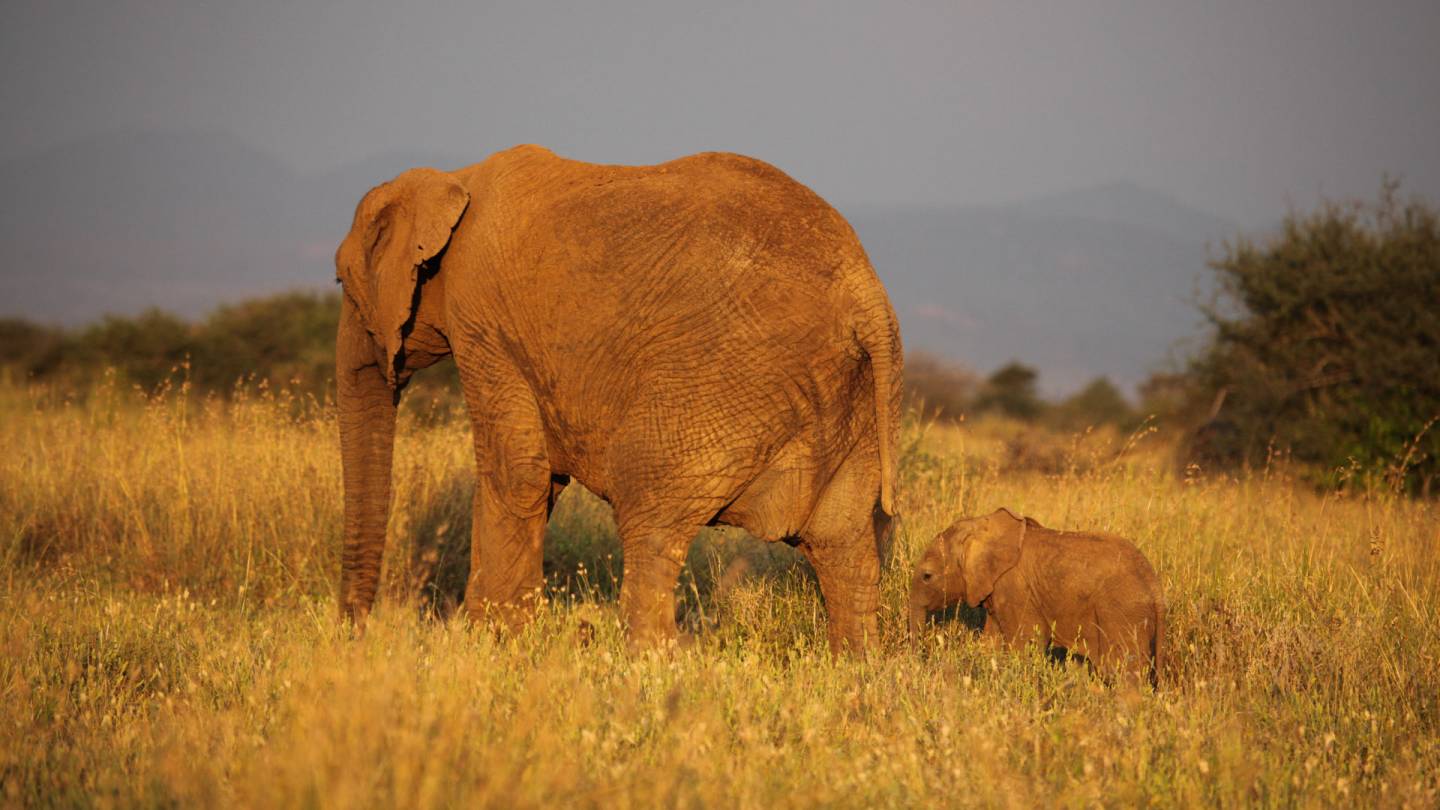
  • An example of cryptic species affecting policy is the African forest elephant being split into two species.
  • The study analyzed nearly 400 recent studies to compare DNA-based counts with traditional taxonomy.
  • Overall, the work emphasizes that biodiversity estimates may be far more complex than once thought.
Vote 0
0
#9
Solar eclipse appears in the sky – but is mostly not visible
#9 out of 946.6K est. views
13h ago

Solar eclipse appears in the sky – but is mostly not visible

  • The year’s first solar eclipse traveled over Antarctica, making it visible mainly to penguins and few humans.
  • The eclipse was described as total and annular at different points along its path.
  • Experts explain the Moon’s elliptical orbit causes its apparent size to vary during eclipses.
  • The next total solar eclipse will occur on August 12, with visibility in cold, remote areas.
  • Partial eclipse may be visible in parts of Europe, Africa and North America.
  • A lunar eclipse is expected on March 3, visible across multiple continents.
  • Concordia Research Station was among the remote sites mentioned for eclipse viewing.
  • Observers were advised to join discussions and stay updated via forums and newsletters.
  • The article includes practical tips about the visibility and timing of upcoming eclipses.
  • Summaries emphasize the astronomical mechanics behind solar eclipses, including visibility patterns.
Vote 0
0

Explore Your Interests

Unlimited Access
Personalized Feed
Full Experience
or
By continuing, you agree to the Privacy Policy.. You also agree to receive our newsletters, you can opt-out any time.

Explore Your Interests

Create an account and enjoy content that interests you with your personalized feed

Unlimited Access
Personalized Feed
Full Experience
or
By continuing, you agree to the Privacy Policy.. You also agree to receive our newsletters, you can opt-out any time.

Advertisement

Advertisement