#1
#1 out of 166.67%
6h ago
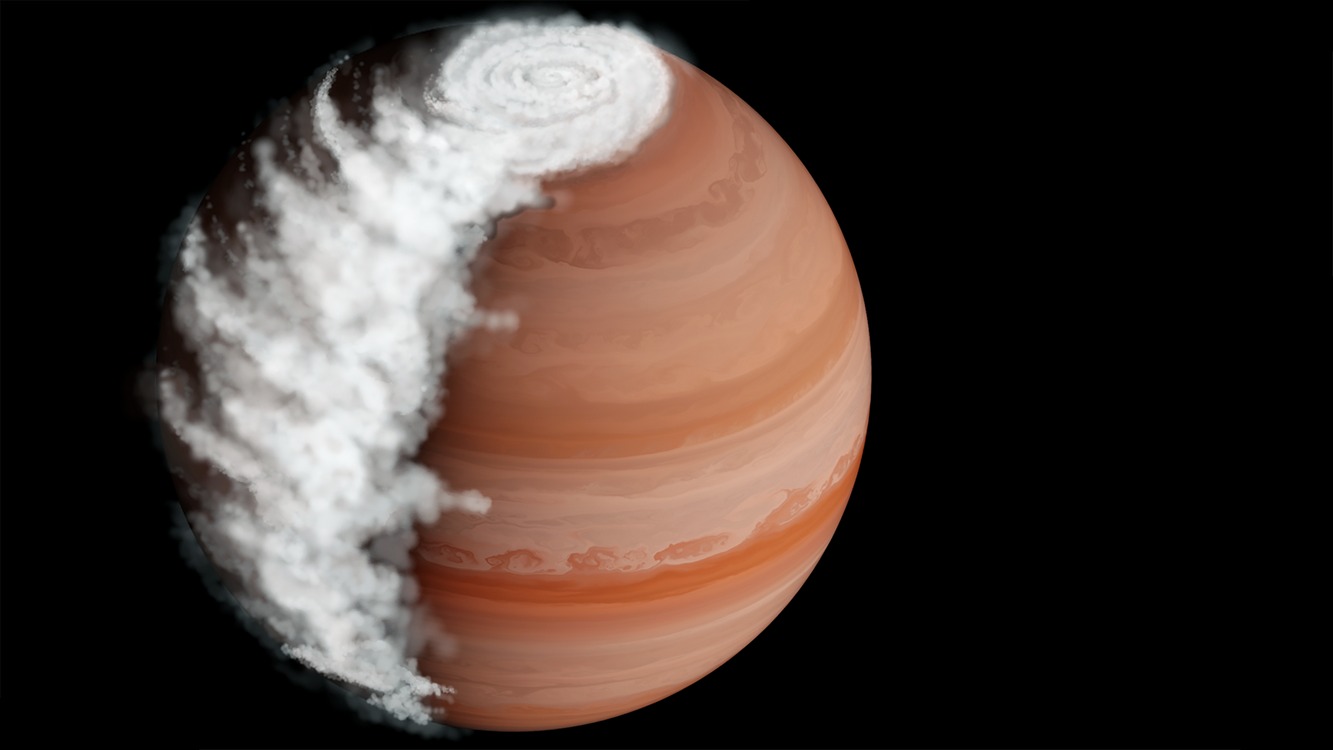
Welcome to the Gas Giant Planet Where Clouds Turn to Stone
- Astronomers use Webb to map WASP-94A b’s atmosphere, detecting a morning cloud cycle with magnesium silicate.
- Evening skies on the planet show a clear view, contrasting with cloudy mornings.
- The study leveraged transit measurements to compare leading and trailing edges during a transit.
- Clouds may evaporate at higher temperatures on the day side, altering composition.
- Researchers found two similar cloud cycles in WASP-39 b and WASP-17 b, indicating broader patterns.
- Scientists aim to compare hot gas giants with planets in the habitable zone for broader context.
- The research highlights that exoplanet cloud behavior can inform theories of planet formation.
- The study provides a clearer picture of exoplanet atmospheres than prior observations.
- WASP-94A b orbits its star closer than Mercury orbits the Sun, creating extreme conditions.
- The team’s findings add context for future exoplanet research and atmospheric studies.
- The study underscores the diversity of cloud chemistry on hot gas giants.
Vote 0