#1
#1 out of 134.3K est. views
entertainment3h ago
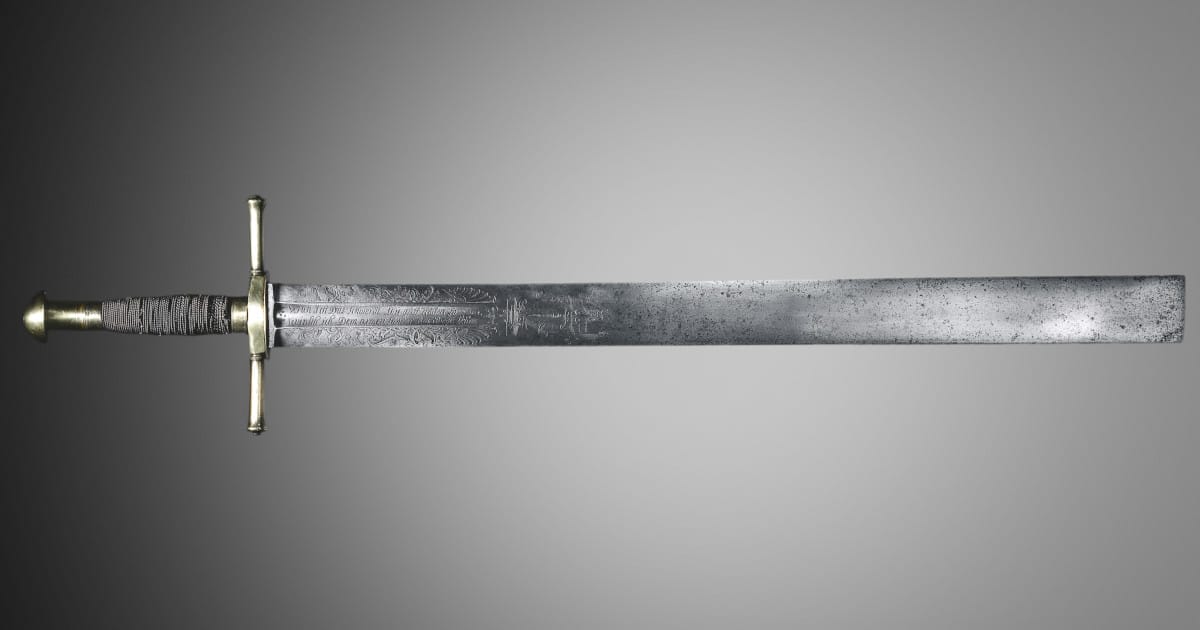
17th-Century Executioner's Sword Has Fascinating Inscription
- A 17th-century German-origin executioner’s sword sits in the Cleveland Museum of Art collection, weighing about 5.07 lbs.
- The blade bears a moral inscription: 'Wan ich Das Schwerdt thu auff heben so / Wunch ich Dem armen sunder das Ewege Leben,' meaning eternal life for the sinner.
- Experts note such blades were often ceremonial rather than purely functional in early Europe.
- The artifact dates to the 17th century and reflects design motifs tied to Justice, the gallows, the rack, or the Crucifixion.
- The Cleveland Museum of Art acquired the sword in 1916 as a gift from Mr. and Mrs. John L. Severance.
- The sword is composed of steel, wood, brass, and copper wire, with a blade measuring about 85.7 cm.
- Museum context explains executions were largely for nobility in the Middle Ages and Renaissance, shifting by the early 1700s.
- The handle and quillons measurements accompany the overall blade size, adding to the sword’s historical profile.
- The object is noted for attracting public fascination due to its engraving and historical context of execution-era weapons.
Vote 0