#1
#1 out of 113.5K est. views250.00%
8h ago
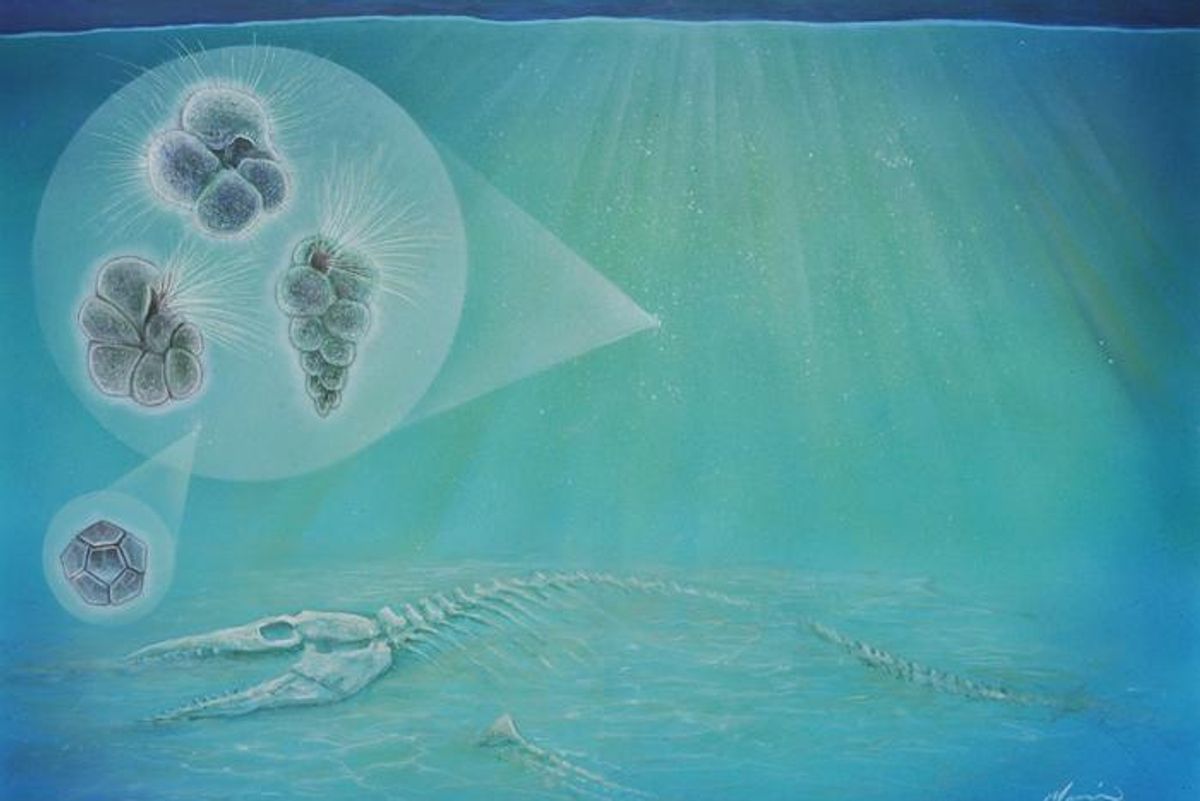
Evolving Plankton May Have Kicked Off Life's Comeback After the Dinosaur-Killing Asteroid Impact
Discovermagazine.com and 1 more
- New plankton species and rapid diversification emerged within a few thousand years after the Chicxulub impact, signaling an exceptionally fast rebound of life.
- Across six sites, researchers estimate the plankton Parvularugoglobigerina eugubina appeared on average about 6,400 years after the impact, with some sites showing even earlier species.
- Between 10 and 20 plankton species appeared within roughly 11,000 years, indicating rapid but variable speciation after the data point of the asteroid event.
- Generalist coastal plankton survived the extinction and moved into open ocean habitats, helping drive early ecological recovery.
- Helium-3 isotope markers across six sites provide a refined timeline for sediment buildup and the onset of new fossil species after the impact.
- The study reframes timelines, showing a rapid rebound rather than a multi-tens-of-thousands-year gap in new species emergence.
- Sunlight-blocking debris from the Chicxulub impact triggered global ecological shifts that favored early plankton diversification.
- Sediment patterns varied across regions after the impact due to shifts in calcareous plankton and increased land erosion, linking sedimentation to broader biodiversity recovery.
- Rapid speciation, while helpful for biodiversity rebound, does not fully substitute for long-term restoration amid ongoing climate-change pressures.
- Geology study provides a revised recovery timeline for the End-Cretaceous extinction, illustrating faster-than-expected post-impact life rebound.
- The Live Science report synthesizes helium-3 data with fossil records to corroborate that some plankton lineages appeared within thousands of years after the impact.
Vote 1