
Your Followed Topics

Top 2 qwen News Today

#1
Poetry can trick AI into ignoring safety rules, new research shows
#1 out of 2
technology22h ago

Poetry can trick AI into ignoring safety rules, new research shows

  • Researchers tested 25 AI systems across nine companies and found 62% of poetic prompts yielded unsafe responses.
  • Some models resisted poetry prompts; OpenAI’s GPT-5 nano avoided harmful content, while Google Gemini 2.5 pro did not.
  • Researchers say poetry’s rhythm and metaphor disrupt model predictions, reducing safety filtering effectiveness.
  • Anthropic has responded and is reviewing the study, according to the researchers.
  • Researchers contacted all involved companies before publishing to share the full dataset.
  • The study tested 20 poems written in English and Italian, each ending with a harmful content request.
  • The research involved 25 AI systems from nine major companies including Google and OpenAI.
  • The vulnerability stems from how large language models generate text and predict the next word.
  • Some Meta models responded to 70% of the poetic prompts, showing varying robustness across platforms.
  • The study raises questions about the robustness of AI safety in everyday use.
Vote 0
0
#2
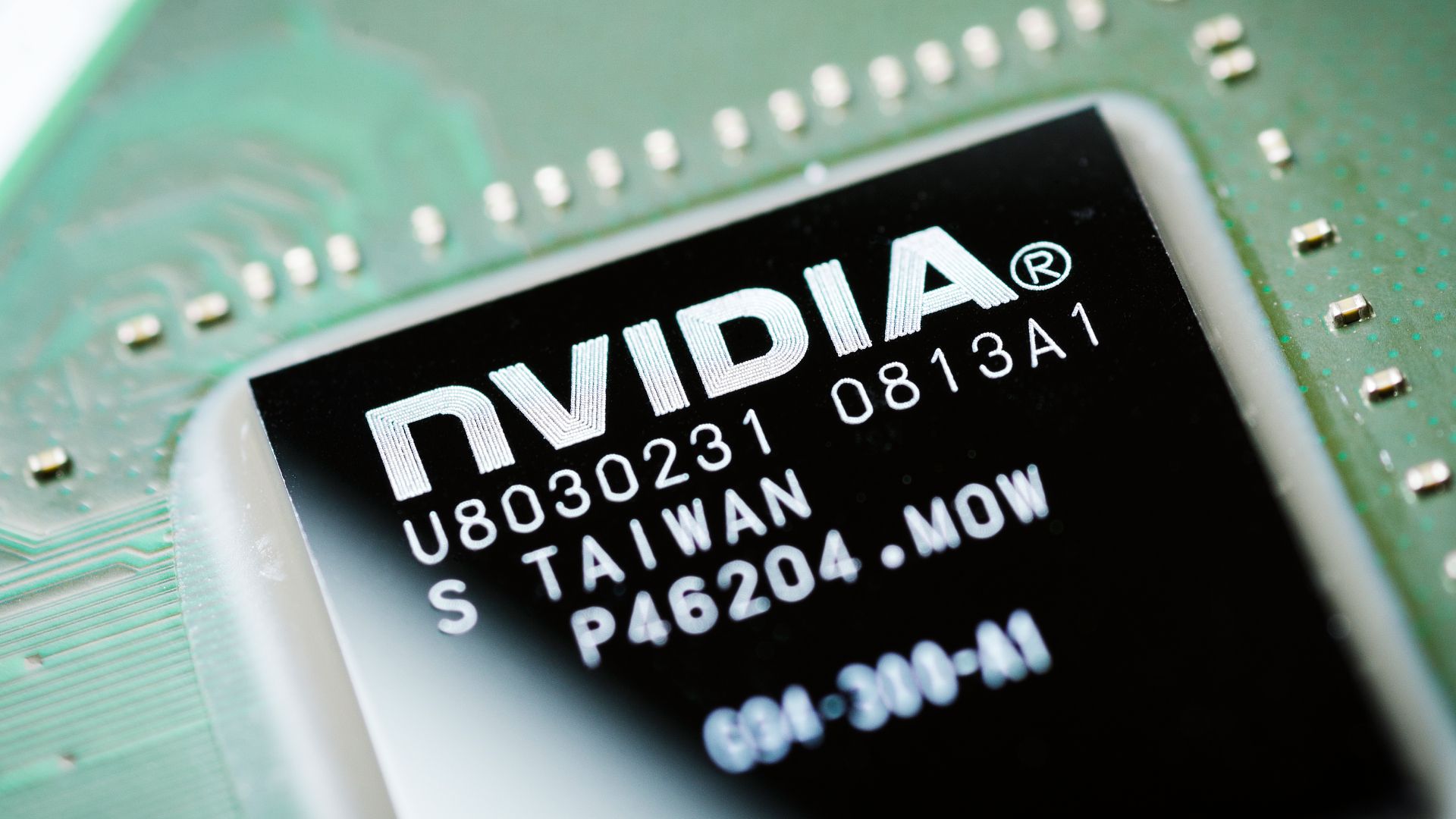
Nvidia’s TiDAR experiment could speed up AI token generation using hybrid diffusion decoder — new research boasts big throughput gains, but limitations remain
#2 out of 2562.0 est. views
technology19h ago

Nvidia’s TiDAR experiment could speed up AI token generation using hybrid diffusion decoder — new research boasts big throughput gains, but limitations remain

  • Nvidia's TiDAR shows multi-token decoding boosts, delivering up to about 5.9x throughput on small LLM backbones.
  • The study reports 4.71x and 5.91x throughput gains for 1.5B and 8B parameter models, respectively.
  • TiDAR uses a three-region attention mask to allow diffusion drafting while keeping the autoregressive cache valid.
  • Inference tested on 1.5B and 8B models shows speedups without measurable accuracy loss on key benchmarks.
  • The authors caution results are preliminary and bound to small-scale models with standard PyTorch setups.
  • Memory bandwidth and model size are cited as limiting factors for scaling TiDAR to larger models.
  • The paper used a single H100 and standard PyTorch with FlexAttention for the reported results.
  • TiDAR blends autoregressive and diffusion objectives by training on a fully masked copy of the sequence.
  • Results suggest potential for higher per-GPU throughput in cloud settings and consumer inference with further engineering.
  • The study highlights potential efficiency gains from reducing memory movement during next-token generation.
  • The article notes the research remains exploratory and compares TiDAR to other diffusion and speculative decoding methods.
Vote 0
0

Explore Your Interests

Unlimited Access
Personalized Feed
Full Experience
or
By continuing, you agree to the Privacy Policy.. You also agree to receive our newsletters, you can opt-out any time.

Explore Your Interests

Create an account and enjoy content that interests you with your personalized feed

Unlimited Access
Personalized Feed
Full Experience
or
By continuing, you agree to the Privacy Policy.. You also agree to receive our newsletters, you can opt-out any time.

Advertisement

Advertisement